
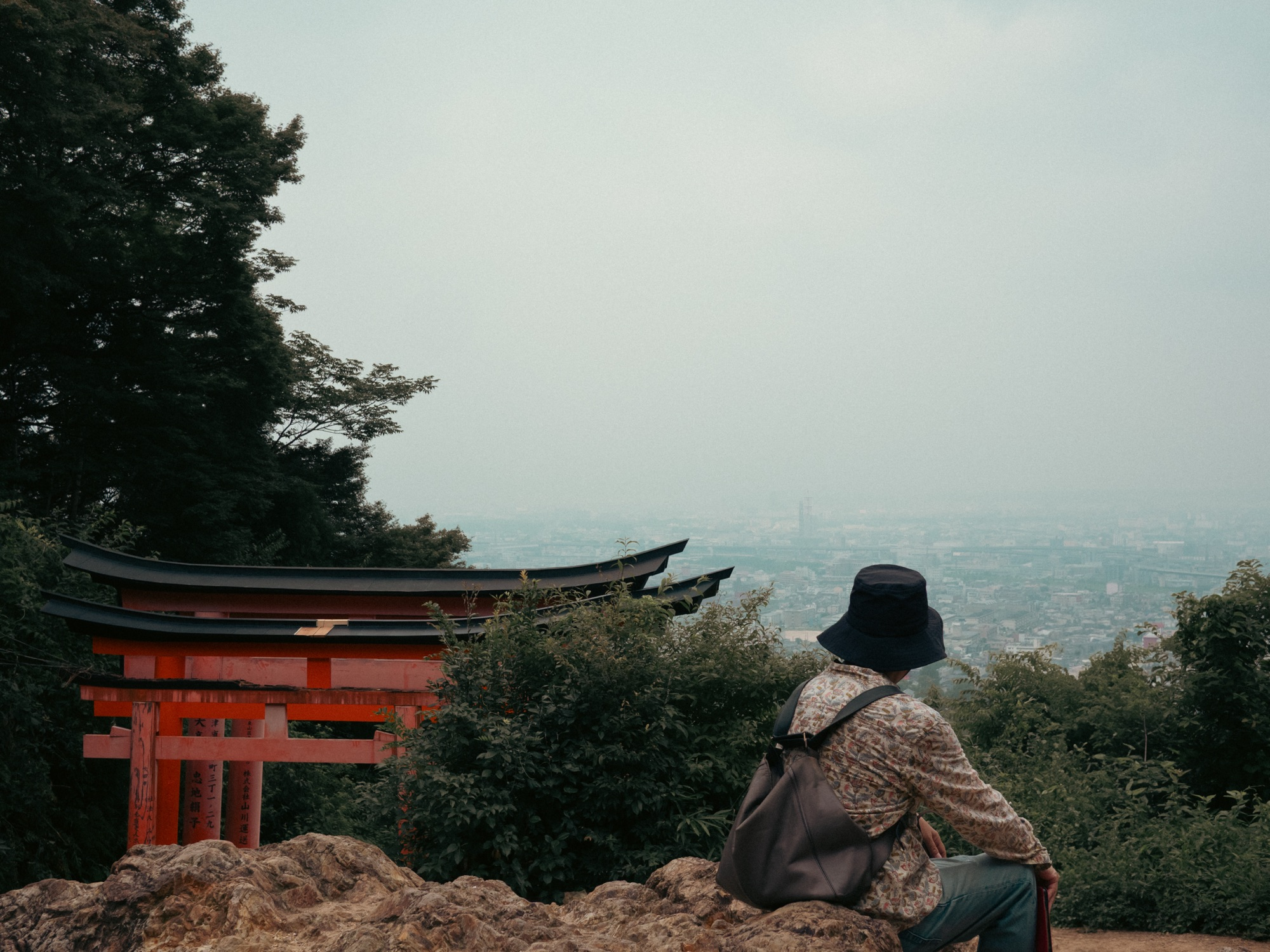
Kyoto, the historic capital of Japan, was a spot that my wife and I had planned to visit for a week during our first trip to Japan. We had done research to find what we thought was the best hotel for our needs. Planned a route of all the places we wanted to visit in the city. We even bought hiking shoes for all the outdoor activities we planned to tackle. Unfortunately our perception of Kyoto went from exciting, to annoying, to get me out of here.
When the Dream Collided with Reality
We arrived in Kyoto full of excitement and quickly realized we had placed ourselves directly in the center of one of the city’s most heavily touristed areas. The streets around our hotel were packed from morning to night, shoulder-to-shoulder crowds flowing in every direction. What I had imagined as quiet and atmospheric felt loud, chaotic, and exhausting.
Even simple things became stressful. Finding somewhere to eat turned into a daily challenge, with restaurants overflowing and wait times stretching endlessly. By the end of each day, we felt more drained than inspired. Kyoto, a city known for refinement and grace, felt anything but peaceful. Public transportation was often crowded, with long waits as well. It felt better to just walk the distance than to wait for a bus that may be full.
There was, however, one moment that reminded us why we had come in the first place.
Visiting Fushimi Inari Shrine was the lone bright spot of that first trip. We got up super early in the morning, grabbed food from the convenience store, and prepared for a climb. As we climbed higher through the torii gates, the crowds thinned and the noise faded. For the first time, Kyoto felt sacred, intentional, and beautiful. It was everything I had hoped the city would be, and it made the contrast with the rest of our experience even harder to ignore.
After only two days, we made a decision we hadn’t anticipated at all: we left early and returned to Tokyo. Kyoto had reminded me of the super touristy places in my home country, a facade of what had been sold to me. It felt like giving up, but at the time, Kyoto simply wasn’t working for us.
Giving Kyoto a Second Chance
Later that year, we decided to try again.
This time, we came back with friends, stayed for a shorter period, and chose a different area of the city, away from the most obvious tourist hotspots. We hoped that distance would bring calm and that Kyoto might finally reveal itself.
But the second attempt wasn’t much better.
Our accommodation was far from major stations and not particularly close to anything we wanted to see. Getting around felt inconvenient, and despite our efforts to avoid tourist-heavy neighborhoods, the city still felt overwhelmingly crowded. We struggled to relax, struggled to connect, and struggled to enjoy ourselves in a meaningful way.
Once again, we left Kyoto feeling disappointed. It was frustrating to admit, but we started to wonder if the city simply wasn’t for us.
Redemption in the Everyday
It wasn’t until our third visit that everything changed.
This time, instead of booking a hotel, we rented a small house near Fushimi Inari, tucked into a quiet, residential neighborhood that most tourists never see. From the moment we arrived, the difference was obvious. The streets were calm. People walked dogs, rode bikes, and greeted each other as they passed. It felt lived-in, not performed.
For the first time, we experienced Kyoto at a human pace.
We ate at small local restaurants where we could interact with the owners, which created a human connection we had not felt yet in the city. We shopped at neighborhood stores instead of souvenir-lined streets. We made an effort to talk with people, to observe daily routines, and to exist within the city rather than consume it.
And the best part? We could still do everything we wanted to do.
Fushimi Inari was right nearby, allowing us to visit at quieter times of day. Shopping and sightseeing were still easily accessible, but they no longer defined the entire experience. Kyoto finally felt balanced, equal parts iconic and ordinary, historic and lived-in. The feeling of being a part of the community, even if for a short period of time, made all the struggles worthwhile.
Forgiving Kyoto and Ourselves
Looking back, it’s clear that Kyoto was never the problem.
Our expectations were too narrow, our timing unfortunate, and our locations poorly chosen. We wanted Kyoto to be something specific, without giving it the space to show us what it actually was. Once we changed how we stayed, and how we approached the city, it rewarded us generously.
Kyoto taught us an important travel lesson: some places don’t reveal themselves unless you slow down, step away from the highlights, and let daily life lead the way.
Now, instead of avoiding Kyoto, we’re planning to return in May of 2026, this time staying in a larger house with friends, in the same quiet area that finally made the city feel like home. What once felt frustrating has become something we genuinely look forward to.
It took us three tries, but we finally learned how to meet Kyoto on its own terms. And once we did, forgiveness came easily.
If you need advice on how to plan a trip to Japan or are looking for a built itinerary or packing list you can check the following links provided below!
Our Ultimate 14 Day Japan Itinerary for First Time Travelers
What to Pack for Japan: A Simplified Traveler’s Checklist
また後で!
Jacob